6 Time-Tested Chord Progressions, bVII and bVI Explained

Six chord progressions account for a remarkable share of popular music: I-V-vi-IV, vi-IV-I-V, i-bVII-bVI-V, i-bVII-bVI-bVII, bVI-bVII-I and I-vi-IV-V. The first two are the bright pop shapes built on a major key. The middle three all lean on the same two borrowed chords, the bVII and the bVI, which is where rock, flamenco and film music get their weight. The last is the fifties turnaround. Each one below is written out in Roman numerals, spelled as actual chords in C major or A minor, matched to songs that genuinely use it, and given a player so you can hear it in one click.
What bVII and bVI actually mean
Half the progressions on this page contain a bVII or a bVI, so it is worth two minutes on what those are before the list starts.
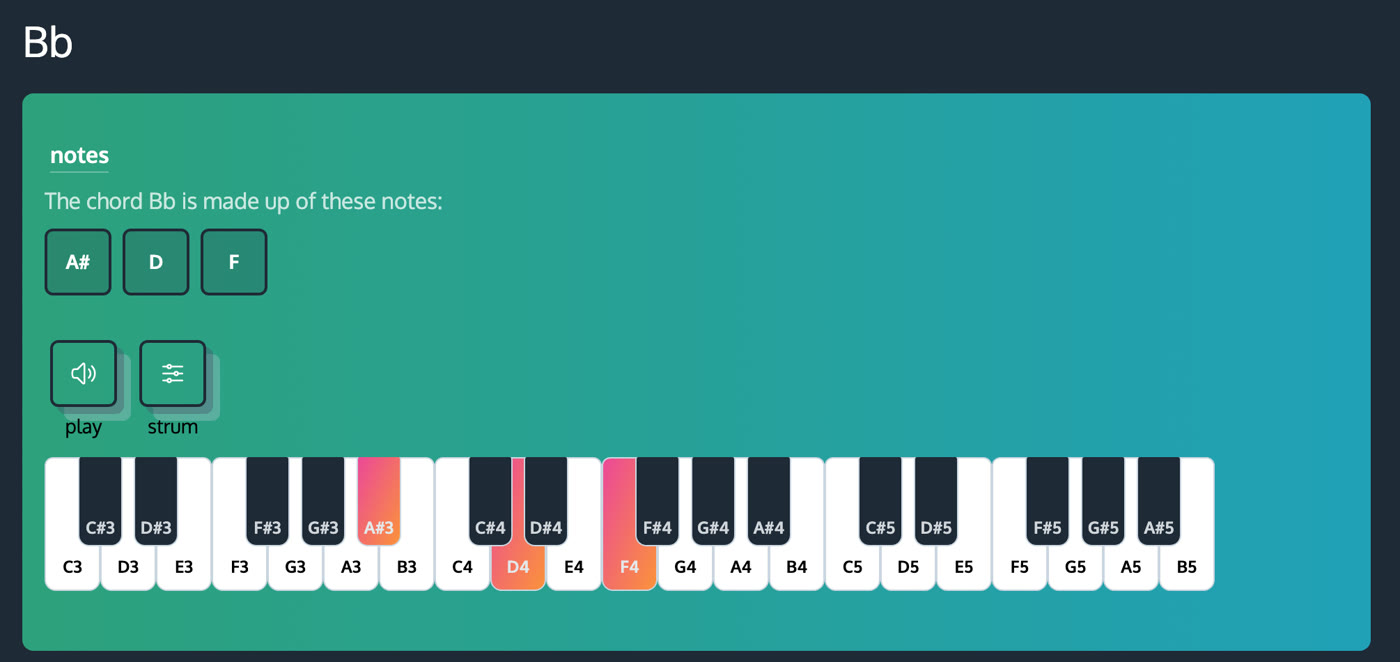
Roman numerals name chords by their position in the key rather than by letter, so the same numeral works in every key. In C major the seventh degree is B and the sixth is A. The small “b” in front means flatten that root by a semitone: bVII is Bb major, bVI is Ab major. Neither chord belongs to C major. Both are borrowed from C minor, which is why theory books call this modal interchange or borrowing from the parallel minor.
The reason they turn up everywhere is that they do something the diatonic chords cannot. A regular V chord contains the leading note and pulls hard back to the tonic. The bVII has no leading note at all, so it moves without that gravitational tug. That is the whole sound: weight without the classical pull. Drop a Bb into a C major song and it stops sounding like a hymn and starts sounding like a rock record.
In a minor key the same two chords are already there. A natural minor scale has a flat seventh and a flat sixth built in, so in A minor the bVII is just G and the bVI is just F. Nothing is being borrowed; it is the sound of the mode itself. This is why the three bVII progressions below are written in A minor and the two pop ones in C major.
| Key | bVI | bVII | I or i |
|---|---|---|---|
| C major | Ab | Bb | C |
| G major | Eb | F | G |
| A minor | F | G | Am |
| E minor | C | D | Em |
| D minor | Bb | C | Dm |
Spotting one by ear is easier than it sounds. In a major-key song, listen for the moment a chord arrives that feels heavier than the rest but does not feel like it is pulling anywhere. If the bass has stepped down a whole tone from the tonic rather than up a fourth or a fifth, that is almost always a bVII. The bVI is the same trick a step further down, and it usually shows up on its way somewhere rather than as a place the music sits. Once you have caught a few, the “borrowed” quality stops sounding like theory and starts sounding like a specific colour you can ask for.
I-V-vi-IV
The four-chord pop progression, sometimes called the axis progression. In C major it is C, G, Am, F.
What makes it work is that it starts and ends in different emotional places. The I and V open bright, the vi drops the mood without leaving the key, and the F sets up a return to C that never quite arrives because the loop restarts first. That unresolved circling is why it can carry a verse for three minutes without anyone getting bored.
Songs built on it include “Let It Be” by The Beatles, “Someone Like You” by Adele, “With or Without You” by U2 and “Don’t Stop Believin’” by Journey. Four different decades and four different genres on the same four chords.
vi-IV-I-V
The same four chords, started on the vi instead of the I: Am, F, C, G.
Rotating the starting point changes the whole feel. Beginning on the minor chord makes the ear hear Am as home, so the progression reads as sad-but-lifting rather than bright-but-yearning. It is the single easiest way to make a familiar shape sound like something else, and it costs nothing to try.
“Zombie” by The Cranberries is the clearest example, sitting on Em, C, G, D for the entire song. “Numb” by Linkin Park runs on the same shape a tone higher, F#m, D, A, E.
i-bVII-bVI-V, the Andalusian cadence
In A minor: Am, G, F, E. The bass walks down four steps, A to G to F to E, and lands on a major E rather than the Em the key would predict.
That last chord is the entire trick. Raising the third of the v chord turns it into a proper dominant, so the E pulls hard back to Am and the loop snaps shut every four bars. The three chords before it descend without any pull at all, then the E supplies all of it at once.
The progression is old. It comes out of flamenco, where it is standard enough to have a name, and it was in circulation long before rock picked it up. You will hear it in “Hit the Road Jack” by Ray Charles, “Stray Cat Strut” by the Stray Cats, the verse of “Sultans of Swing” by Dire Straits and “Runaway” by Del Shannon.
i-bVII-bVI-bVII, the Aeolian shuttle
Change one chord and the character changes completely: Am, G, F, G. Instead of resolving onto a major V, the progression walks down to the bVI and then straight back up to the bVII, and starts again.
There is no dominant chord anywhere in it, so nothing ever resolves. It just rocks between the same three chords, which is why it suits songs that need to sit on one mood for a long time rather than build to something. That rocking motion is where the “shuttle” name comes from.
“All Along the Watchtower” is the definitive example, particularly the Hendrix recording, and the chorus of “In the Air Tonight” by Phil Collins does the same thing in D minor.
bVI-bVII-I, the Mario cadence
Take the same two borrowed chords and climb them instead of descending, and you get the most triumphant three chords in popular music. In C: Ab, Bb, C.
Everything about it is engineered to feel like an arrival. Both borrowed chords come from the minor, so the first two thirds sound dark, and then the final chord is a plain major tonic. The bass rises by a whole step twice in a row, which is unusual enough that the ear notices the climb. There is no dominant chord, so the resolution arrives without the polite cadence a V-I would give you. It just lands.
The reason it has a nickname is Koji Kondo’s level-complete fanfare from Super Mario Bros., which is this progression and almost nothing else. It predates the game by decades, though: The Beatles climb it in the verse of “I Am the Walrus”. Film and game composers reach for it constantly whenever something needs to feel won.
End it on a minor i instead of a major I and you get the version musicologists usually mean by the Aeolian cadence, which is the same climb without the final lift. The chorus of “Psycho Killer” by Talking Heads does exactly that, landing on Am rather than A.
I-vi-IV-V
The fifties turnaround: C, Am, F, G. Doo-wop was built on it, and it never really went away.
Compared with I-V-vi-IV it is the tidier progression. The vi arrives second rather than third, so the minor colour lands early and the last two chords are a clean IV-V walk back to the tonic. It resolves properly every four bars, which makes it feel settled and slightly old-fashioned, and that is often exactly what you want.
“Stand by Me” by Ben E. King, “Blue Moon” and “Every Breath You Take” by The Police all run on it.
Making any of them sound less familiar
Because these shapes are so common, the useful skill is not learning them but bending them.
The cheapest change is to suspend a chord on the way past. Swapping a G for a Gsus4 just before it resolves buys an extra beat of tension without altering the progression: sus chords explained covers that move properly. Adding sevenths does something similar to the harmony rather than the rhythm, and turning the F into an Fmaj7 in any of the C major progressions above immediately makes them sound less like a campfire and more like a record.
The other option is to keep the chords and move the bar line. Landing a chord an eighth note early, so it arrives before the beat instead of on it, is most of what separates a house record from a pop one on identical harmony.
If you want a specific mood rather than a general-purpose shape, 12 sad chord progressions grouped by mood covers the minor-key and borrowed-chord side of this in the same playable format, and house chord progressions covers the rhythmic side.
Quick answers
What is the most common chord progression? I-V-vi-IV, which is C, G, Am, F in the key of C major. It sits under a huge share of pop, rock and soul songs, and vi-IV-I-V is the same four chords started in a different place.
What does bVII mean in a chord progression? The bVII is the major chord built on the flattened seventh degree of the scale. In C major that is Bb; in A minor it is G. In a major key it is borrowed from the parallel minor, and because it contains no leading note it moves without pulling back to the tonic, which is what gives it its rock character.
What is the bVI-bVII-I progression? Ab, Bb, C in the key of C major. Two chords borrowed from the minor climbing by a whole step each into a major tonic. It is often called the Mario cadence after the level-complete fanfare from Super Mario Bros., and the choruses of “I Am the Walrus” and “Psycho Killer” both use it.
What is the i-bVII-bVI-V progression? Am, G, F, E in the key of A minor. It descends step by step from the minor home chord and then lifts onto a major V, which is why it sounds tense and dramatic. It comes from flamenco, where it is known as the Andalusian cadence, and “Hit the Road Jack” and “Stray Cat Strut” both run on it.
What is the difference between i-bVII-bVI-V and i-bVII-bVI-bVII? Only the last chord. The first resolves onto E major, a proper V that pulls hard back to Am. The second goes back to G, so it loops without ever really resolving, which is why it feels moodier.
What is the bVII chord on piano? In C major, play Bb, D and F together. In G major it is F, A and C. The quickest way to find it in any key is to take the tonic, count down two semitones, and build a major triad on that note.
Which chord progression should a beginner learn first? I-V-vi-IV. Four common chords, no barre shapes required in C or G, and once you know it you can play along with hundreds of songs.
Generate chord progression